
What did the client need?
The client wanted an intuitive app that makes healthy habits easy to keep. Three requirements shaped the project:
- Simple daily tracking. Users should see at a glance what to do today and how much of their plan they have followed.
- iOS and Android. The app had to work the same way on both platforms.
- A first version to launch. The client asked for an MVP: the core features needed to launch, built from scratch.
What did the team build?
The app brings workouts, nutrition and expert support together in one place.
| Feature | What it does for the user |
|---|---|
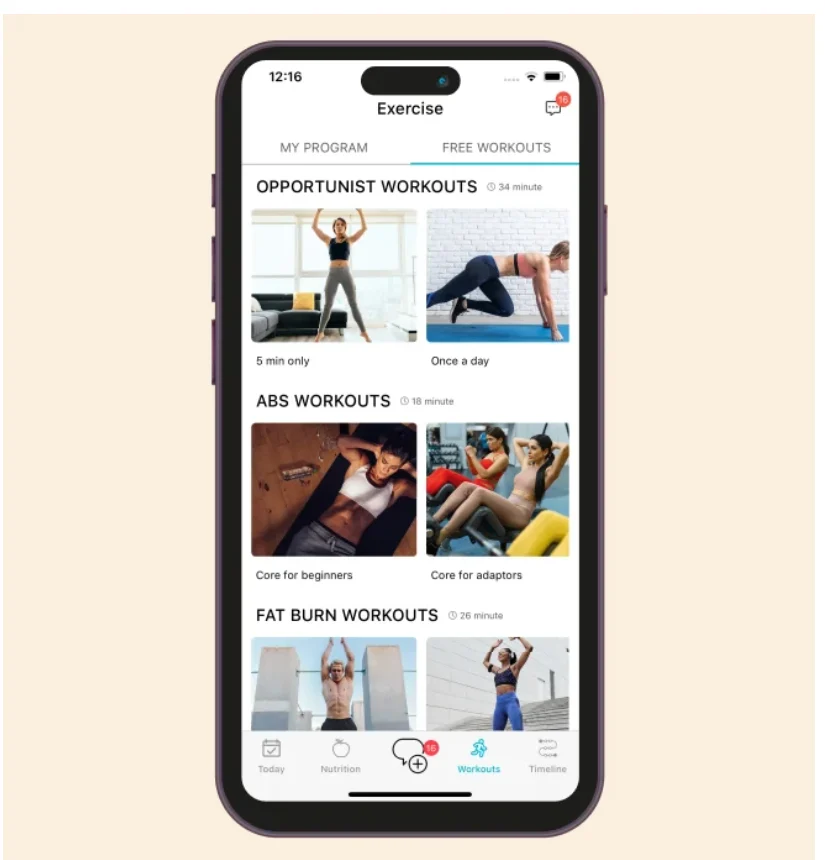
| Workout programmes | Follow an assigned programme or choose free workouts, grouped by goal (for example abs or fat burn) and level |
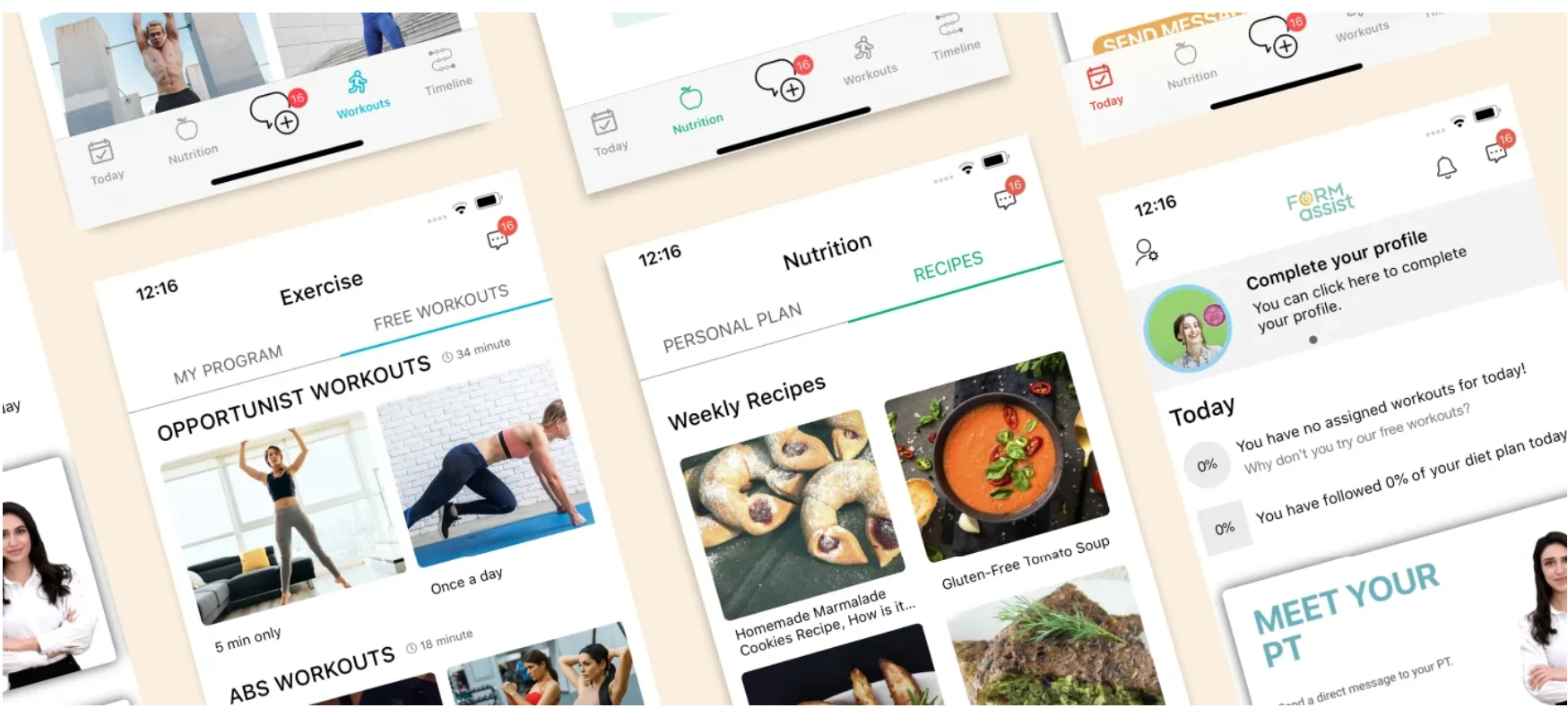
| Nutrition plan and recipes | See a personal nutrition plan and browse recipes that fit it |
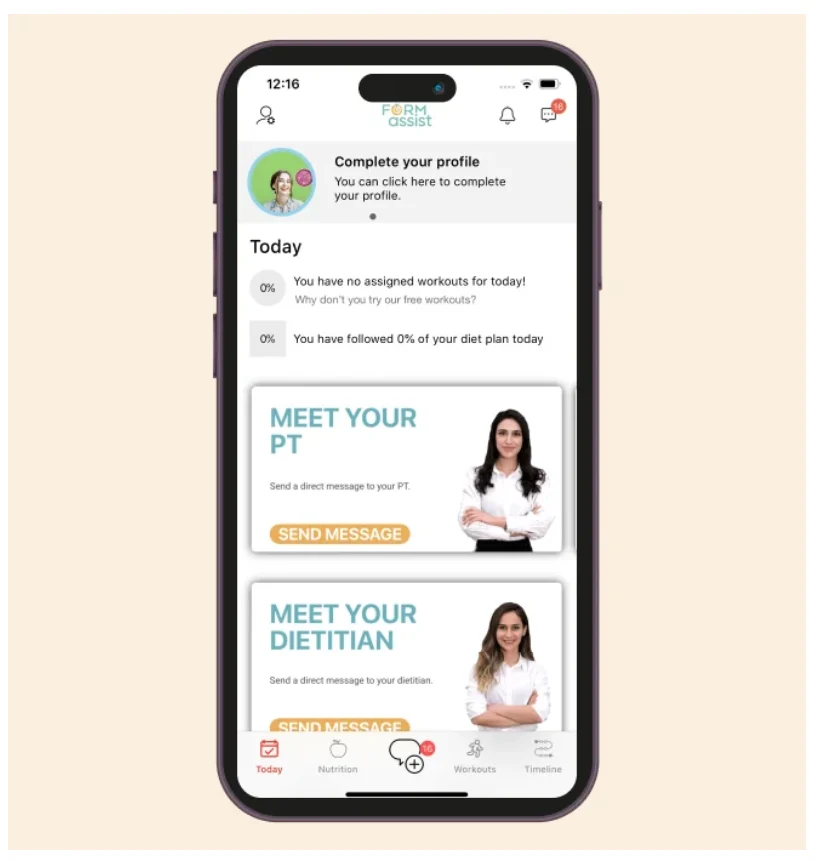
| Daily progress | See today’s assigned workouts and how much of the diet plan has been followed |
| Personal trainer and dietitian | Send a direct message to a personal trainer or dietitian from inside the app |
| Profile and secure login | Create an account, sign in securely and complete a profile |
| Push notifications | Get reminders that help users stick to their routine |
| Analytics | Lets the client see how people use the app |
How did the project run?
- 1
Discovery workshops. The team and the client agreed the core features and the main user journeys.
- 2
UI/UX design. Screens were designed for simple, quick daily use.
- 3
Development in sprints. A team of 2–5 people built the app in agile sprints, with regular demos to the client.
- 4
Communication. The client and team worked together through virtual meetings throughout the project.
What was the result?
The MVP was delivered on time and as the client had planned it. Asked about measurable outcomes, the client answered: “The project was delivered as we imagined.” No usage figures were shared, so none are reported here.
What did the client say?
“They handled the project management well and delivered on time. Shishir was particularly helpful and a pleasure to deal with.”
Managing Director
Wellness and fitness company, London (name withheld) · Clutch review, May 2023
| Overall | Quality | Schedule | Cost | Willing to refer |
|---|---|---|---|---|
| 5.0 | 5.0 | 5.0 | 5.0 | 5.0 |
Ratings out of 5, from a verified online review the client submitted to Clutch. Read the full review.
How much does a wellness app MVP cost?
This MVP fell in Clutch’s $10,000 to $49,999 range in 2022. It covered workouts, nutrition plans, daily progress, messaging with experts, secure login, notifications and analytics for iOS and Android. Adding features such as video classes, wearable integration or in-app payments raises the cost. Most apps we build cost between £5,000 and £150,000. See what affects app development cost.