

Our team carries 13 years of hands-on experience in React Native, Flutter, and native frameworks, and our clients trust us with mission-critical builds.
Cross-Platform App Development Company in London
Cross-platform app development company in London stands as one of the best cross-platform app development agencies, helping startups, SMEs, and enterprises build apps that run from a single codebase. LAD offers a full range of app development services, including native iOS and Android development, web app development, and AI-powered solutions to each client's business goals.
Our team brings 13 years of deep expertise in the UK for React Native, Flutter, and modern backend structure to deliver secure applications for fintech, healthcare, and retail.











Cross-Platform App Development Reviews
Trusted by 250+ global brands. Explore verified reviews across our specialized tech ecosystems.


Excellent communication, professionalism, and responsiveness throughout the project. Their commitment to delivering outstanding results made them a reliable development partner.Nia Lewis
Director, My Fit Month Ltd


Demonstrated outstanding expertise and professionalism while delivering top-notch results. A trusted partner for high-quality app development services.
Danny ThomasDigital Operations Manager, NGE Booking


Strong project management and timely delivery ensured a successful outcome. Their professionalism and reliability make them a dependable development partner.
Alex HobernManaging Director, Hop


Delivered all project requirements within the agreed timeline with dedication and efficiency. Their commitment and timely execution contributed to a successful project outcome.
Micheal HarrisUnify London Taxis Limited
Our Cross-Platform Application Development Services
Our cross-platform application development services deliver end-to-end development of initial discovery and planning through to deployment and long-term support. It helps UK tech firms ship faster in Operating Systems (OS) without compromising on quality.
Custom Cross-Platform App Development
We scope, design, and build customised applications that run on iOS, Android, and web, one codebase, but full platform coverage.
Cross-Platform App Development Consulting
Navigate the complexities of cross-platform development with our expert consulting services. We guide you through technology choices, best practices, and strategies to ensure your app thrives across various platforms.
AI-Integrated Cross-Platform Application
We embed intelligent features, from natural language processing to predictive logic, into your cross-platform app from the beginning.
Cross-Platform UI/UX Design Solutions
We design component systems that feel native, if your users are on mobile or desktop. Our UI/UX solutions provide consistent interfaces built for every screen.
Cross-Platform Web App Development
Progressive and responsive web applications for performance in browsers and devices. No compromises on speed or functionality.
Application Support & Maintenance
We keep your application stable, secure, and evolving, from bug fixes and OS updates to performance monitoring and feature iterations.
PoC/MVP App Development
Validate your concept quickly with a lean and functional build. We help you test assumptions, gather real user feedback, and move to full development with our PoC/MVP.
Cross-Platform App Solutions for Various Industries
Cross-platform app solutions are not one-size-fits-all. Every sector has its own workflows and demands. We build apps for your industry, delivering performance on the devices your teams and customers rely on.
Manufacturing
Cross-platform apps built for manufacturing connect shop floor operations, production planning, and ERP systems in one interface. It reduces manual processes and gives managers visibility at every site.
Healthcare
Digitising clinical workflows, appointment management, and patient record access in mobile and desktop devices helps providers reduce admin overhead and meet HIPAA and CQC compliance requirements without separate systems per device.
Retail
Bringing POS terminals, inventory management, and customer loyalty data onto a single cross-platform codebase gives retailers consistent stock visibility and an omnichannel experience.
FinTech
Real-time transaction monitoring, FCA-aligned compliance reporting, and secure payment processing are easier to deliver and maintain when built on one cross-platform rather than separate iOS, Android, and web builds.
Real Estate
Property listings, MLS/IDX data, client CRM, and document signing handled within one cross-platform app shortens deal cycles and keeps agents, buyers, and tenants aligned from initial enquiry through to completion.
Transportation
Fleet tracking, route optimisation, and driver dispatch tools deployed cross-platform mean that back-office coordinators and field drivers are working from the same live data, without the lag of siloed systems.
Oil & Gas
Field inspection teams, upstream and downstream operators, and HSE compliance managers benefit from cross-platform apps that surface asset data and maintenance schedules.
IT & Telecom
Network monitoring dashboards, customer self-service portals, and IoT connectivity management are faster to ship and easier to maintain when built cross-platform, reducing duplicated dev effort in web environments.
Travel & Hospitality
A cross-platform approach ensures travellers get an experience on their device, from booking engines and guest management systems through to loyalty programmes and post-stay feedback tools.
Education
Learning management systems, student progress tracking, and institution-wide communication tools built cross-platform work well on school-issued devices, personal mobiles, and desktop browsers.
Our Cross-Platform App Development Process
Our cross-platform app development process starts with a clear process from early discovery through to post-launch support. We follow a structured process of developing app that removes guesswork and ensures nothing gets built without purpose.
Technologies We Use for Cross-Platform App Development
The technologies we use for cross-platform app development are modern frameworks, libraries, and platforms that enable us to build fast apps that are capable of running on iOS, Android, and the web.
Frontend
Backend
Platforms
Database
UI/UX
React
React is a JavaScript library for building user interfaces using reusable, component-based architecture with a virtual DOM and data flow through JSX syntax.
Why React is Ideal for Frontend:
Enables rapid development of UIs through declarative rendering and a mature ecosystem that accelerates cross-platform consistency.
Angular
Angular is a full-featured TypeScript framework that provides built-in routing, dependency injection, RxJS observables, and reactive forms for complex, large-scale apps.
Why Angular is Ideal for Frontend:
Offers tooling, strong typing, and an opinionated MVC structure that ensures consistency in enterprise-grade cross-platform projects.
Next.Js
Next.js is a meta-framework built on React that adds Server-Side Rendering (SSR), Static Site Generation (SSG), static regeneration, and file-based routing for optimised performance.
Why Next.js is Ideal for Frontend:
Combines client and server rendering to reduce initial load times and improve SEO, while maintaining a unified codebase for web and mobile-web experiences.
Vue.Js
Vue.js is a JavaScript framework with reactive data binding, Single-File Components (SFCs), and a template syntax with composition patterns.
Why Vue.js is Ideal for Frontend:
Provides a gentle learning curve and flexible component structure, making it ideal for teams building adaptive user interfaces in multiple screen sizes.
Flutter
Flutter is a UI toolkit that uses Dart to build native applications for mobile, web, and desktop from a single codebase with hot reload and a widget library.
Why Flutter is Ideal for Frontend:
Delivers pixel-perfect UI consistency, near-native performance through machine code, and rapid iteration cycles in platforms without interpreted script overhead.
Kotlin
Kotlin is a modern, statically-typed language for the JVM that integrates with Java, provides null safety, and is the language for Android native development.
Why Kotlin is Ideal for Frontend:
Reduces boilerplate code, enables developers to leverage Android's native UI frameworks and Material Design components while maintaining concise, readable syntax.
HTML5
HTML5 is the latest markup standard that includes semantic elements, canvas APIs, Web APIs, and landmarks for building modern, standards-compliant web experiences.
Why HTML5 is Ideal for Frontend:
Provides native semantics for structure, improved accessibility, and deep browser API integration that improves usability and cross-device compatibility.
CSS3
CSS3 is the latest stylesheet standard featuring flexbox, CSS Grid, custom properties (CSS variables), animations, transitions, and media queries for responsive design.
Why CSS3 is Ideal for Frontend:
Enables responsive and layout-agnostic designs through grid systems, reducing media query complexity and consistent spacing in all device sizes.
Swift
Swift is Apple's modern, type-safe programming language designed for iOS, macOS, watchOS, and tvOS with memory safety, optional types, and direct access to native frameworks.
Why Swift is Ideal for Frontend:
Combines compile-time type checking, automatic reference counting, and SwiftUI declarative syntax, enabling developers to build performant, crash-resistant native interfaces.
Xamarin
Xamarin is a .NET-based cross-platform framework that allows sharing C# code in iOS, Android, and Windows, while accessing APIs and native controls.
Why Xamarin is Ideal for Frontend:
Enables code sharing for business logic and UI patterns in platforms while leveraging renderers, native performance, and direct access to Objective-C and Java.
Node.js
Node.js is a JavaScript runtime built on Google's V8 engine that executes asynchronous code outside the browser.
Why Node.js is Ideal for Backend:
Handles concurrent connections using a non-blocking I/O model, event loop architecture, and asynchronous processing, making it suitable for real-time applications and APIs.
Python
Python is an interpreted language known for clean syntax and extensive libraries for web and backends.
Why Python is Ideal for Backend:
Code readability and rapid prototyping with Django or Flask, making it quick to build REST APIs and handle complex business logic.
Ruby On Rails
Ruby on Rails is a full-stack web framework built on Ruby that follows Convention over Configuration (CoC) and the Model-View-Controller (MVC) pattern.
Why Ruby on Rails is Ideal for Backend:
Speeds up app development with built-in ORM, database migrations, scaffolding, and RESTful architecture, reducing repetitive coding tasks.
PHP
PHP is a server-side scripting language with typing, built-in database connectivity, and template engine support for dynamic content.
Why PHP is Ideal for Backend:
Easy deployment on shared hosting, syntax for beginners, and modern frameworks like Laravel provide OOP patterns and middleware pipelines.
Java
Java is a strongly-typed language running on the JVM with multithreading, garbage collection, and enterprise frameworks.
Why Java is Ideal for Backend:
Strong type safety catches errors at compile time, excellent performance, and Spring Boot handles dependency injection and auto-configuration automatically.
Django
Django is a high-level Python web framework that follows the Model-Template-View (MTV) architecture and promotes rapid development.
Why Django is Ideal for Backend:
Django includes a built-in ORM, authentication system, middleware architecture, and security features that simplify complex backend development.
Express.Js
Express.js is a minimal Node.js framework providing routing, middleware, and HTTP handling without enforced patterns.
Why Express.js is Ideal for Backend:
Lightweight and flexible, allowing custom middleware chains and REST endpoint design without framework constraints or overhead.
Spring Boot
Spring Boot is a Java framework with auto-configuration, embedded servers, dependency injection, and microservices support.
Why Spring Boot is Ideal for Backend:
Auto-setup of Tomcat, database connections, and logging. The annotations handle routing, that reduce boilerplate.
React Native
React Native uses JavaScript to render native UI components through a bridge, giving apps an authentic look on iOS and Android from one codebase.
Why React Native is Ideal for Platforms:
Hot reload speeds up testing, native modules access device hardware, and a large component library cuts build time.
Android
Android is Google's mobile OS built on the Linux kernel, supporting native code via Kotlin or Java with cross-platform frameworks.
Why Android is Ideal for Platforms:
Open architecture allows hardware access, Material Design keeps UI consistent, and the Play Store offers wide app distribution.
iOS
iOS is Apple's mobile OS that runs on tightly controlled hardware, using native frameworks (UIKit and SwiftUI) for smooth performance.
Why iOS is Ideal for Platforms:
Strict App Store review ensures quality, tight hardware integration boosts speed, and users show strong app engagement.
Flutter
Flutter compiles Dart code to native machine code, using its own Skia engine to render a consistent UI in iOS android.
Why Flutter is Ideal for Platforms:
One codebase skips the JS bridge, custom widgets keep UI pixel-perfect, and compiled code runs near-native speed.
MongoDB
MongoDB is a NoSQL database that stores data as flexible, JSON-like documents instead of tables, allowing schema changes without downtime.
Why MongoDB is Ideal for Database:
Horizontal scaling through sharding, fast read/write for unstructured data, and native JSON support fit with JavaScript-based backends.
MySQL
MySQL is a relational database that organises data into tables with relationships, accessed through standard SQL queries.
Why MySQL is Ideal for Database:
Mature ecosystem with hosting support, reliable replication for scaling reads, and proven performance for high-traffic applications.
Firebase
Firebase is Google's cloud platform offering a real-time NoSQL database that syncs data instantly across connected devices and clients.
Why Firebase is Ideal for Database:
Real-time sync updates UI instantly, built-in authentication reduces setup time, and offline support keeps apps functional without connectivity.
PostgreSQL
PostgreSQL is an open-source relational database that enforces strict schemas, supports complex queries, and handles transactions with full ACID compliance.
Why PostgreSQL is Ideal for Database:
Advanced indexing speeds up large queries, JSONB support handles hybrid data, and strong consistency suits financial or transactional apps.
SQLite
SQLite is a lightweight, file-based relational database that runs embedded within the app itself, requiring no separate server process.
Why SQLite is Ideal for Database:
Zero setup with no server overhead, fast local reads for mobile apps, and a small footprint keep app size minimal.
Oracle
Oracle is an enterprise-grade relational database that handles massive transaction volumes with advanced clustering, partitioning, and security features.
Why Oracle is Ideal for Database:
High availability through clustering, strong security for sensitive data, and proven for large-scale enterprise systems.
Adobe XD
Adobe XD is a vector-based design tool that builds wireframes, prototypes, and interactive mockups within the Creative Cloud ecosystem.
Why Adobe XD is Ideal for UI/UX:
Auto-animate creates smooth transitions, repeat grids speed up layout design, and shared design libraries keep components consistent in screens.
Sketch
Sketch is a macOS-based vector design tool focused on pixel-perfect UI design, symbol libraries, and reusable component systems.
Why Sketch is Ideal for UI/UX:
Symbols and nested overrides keep designs consistent, plugins extend functionality, and artboards organise screen variations cleanly.
Figma
Figma is a browser-based design tool built for real-time collaboration, vector editing, and interactive prototyping across teams.
Why Figma is Ideal for UI/UX:
Multiplayer editing lets teams design together live, auto-layout adapts components responsively, and dev mode exposes specs directly to developers.
InVision
InVision is a prototyping platform that turns static designs into clickable, interactive mockups for stakeholder review and usability testing.
Why InVision is Ideal for UI/UX:
Hotspot linking simulates real navigation, comment threads gather feedback in context, and version history tracks design iterations.
Zeplin
Zeplin is a design handoff tool that converts finished UI designs into developer-ready specs, style guides, and exportable assets
Why Zeplin is Ideal for UI/UX:
Auto-generated spacing and colour values reduce guesswork, style guides centralise design tokens, and asset export saves manual extraction work.
Why Choose LAD for Cross-Platform App Development in London?
The reasons to choose LAD for cross-platform app development in London are listed below.
We scope every app around your specific goals and users, and nothing leaves our team as a templated, copy-paste build.
Our design process is focused on modern prototyping tools and design systems, and the result is an interface that feels intuitive on every device.
Our engineers move in frontend, backend, and database technologies, and that range supports everything from lean MVPs to enterprise-grade systems.
We follow a five-stage workflow built for momentum, and most projects reach launch within 8 to 16 weeks, depending on scope.
We keep communication transparent at every stage, and flexible fixed-price or hourly models mean no hidden costs catch you off guard.
PORTFOLIO
Our Cross-Platform App Development Projects
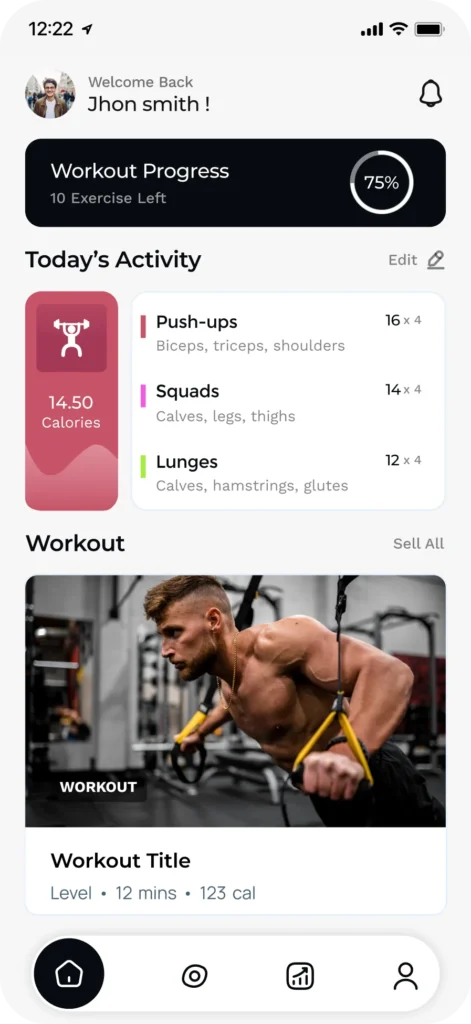
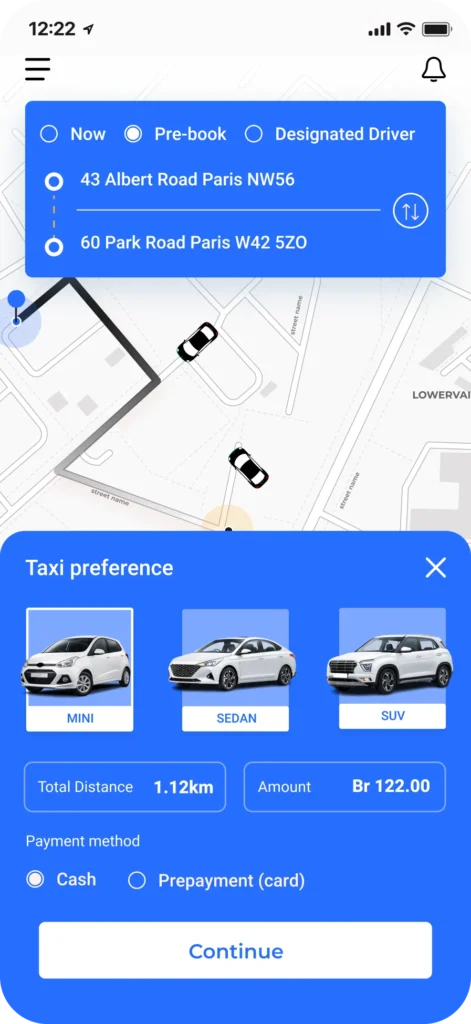
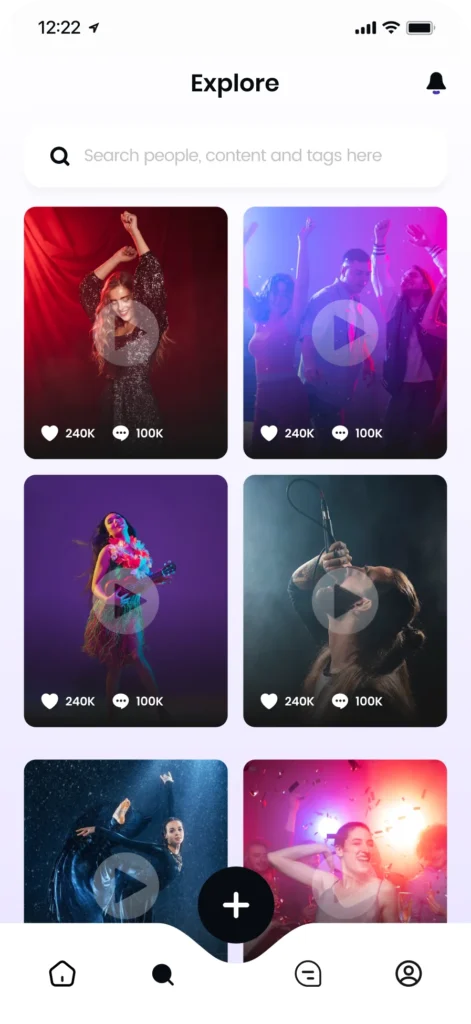
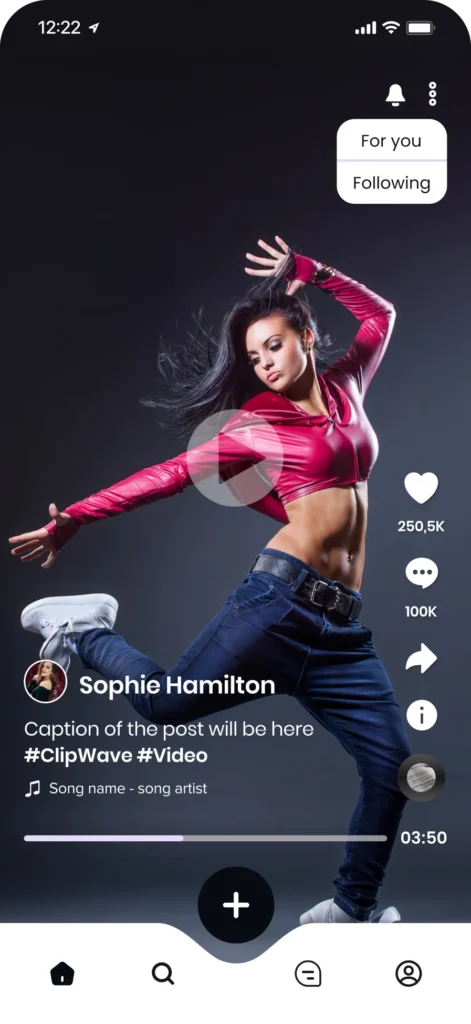
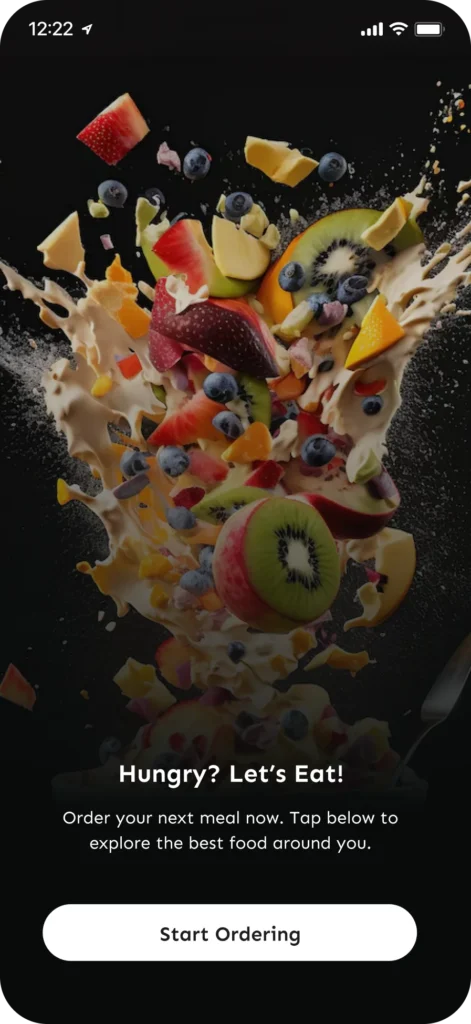
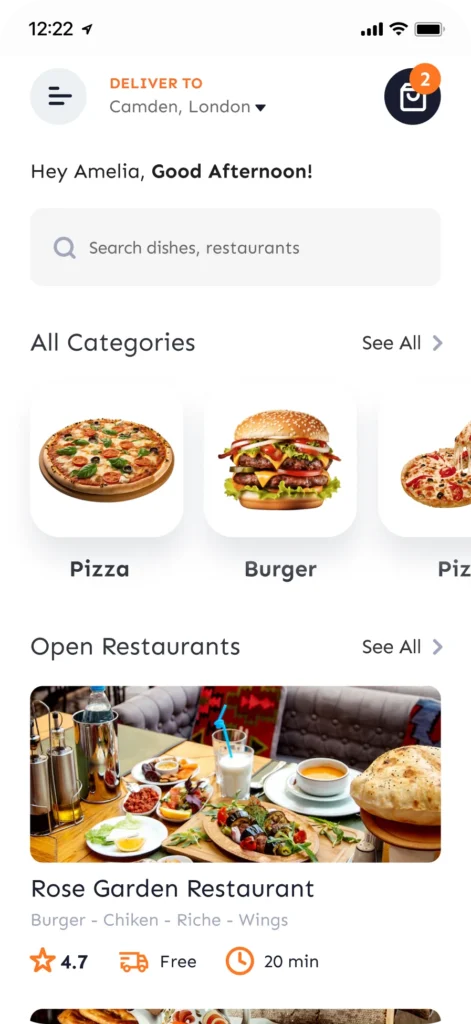
Take a look at the cross-platform development applications we have built for clients that are customised to solve a specific business challenge.


Ready to Launch Your Cross-Platform App?
Turn your idea into a feature-rich mobile application that works flawlessly across iOS and Android. Partner with our London-based experts to build, test, and launch faster without compromising quality.
What is cross-platform app development, and how does it differ from native app development?
It refers to a service where one mobile app is compatible with all operating systems.
Cross-platform app development uses a single codebase, instead of writing separate code for each native platform, to ensure faster deployment.
Why Should Businesses Choose Cross-Platform App Development?
Businesses should choose cross-platform app development because it cuts costs and time-to-market by reusing a single codebase in iOS, Android, and web instead of building separate native apps. It simplifies long-term maintenance, since bug fixes and feature updates apply to one codebase rather than multiple, while delivering UI, near-native performance, and access to device APIs in every platform.
How Much Does It Cost to Develop a Cross-Platform App?
It costs between £5,000 and £150,000 to develop a cross-platform app, depending on the platform scope and feature requirements. The full app development cost varies based on design depth, third-party integrations, testing, and post-launch support needs.
Why should you hire a Cross-Platform App Development Company?
You should hire a cross-platform app development company because it delivers end-to-end development and post-launch support, removing the risks of offshore outsourcing and fragmented project management. A team brings proven fluency in React Native and Flutter, established QA processes for testing to the enterprise without rebuilding down the line.
Which Platforms can Cross-Platform Apps Support?
Cross-platform apps can support iOS, Android, and web from a single codebase, using frameworks (React Native or Flutter) to compile shared logic into native components for each operating system. Cross-platform frameworks extend to desktop environments (Windows, macOS, Linux), giving enterprises a unified codebase that reaches every device their users rely on.
Can Existing Native Apps Be Converted into Cross-Platform Apps?
Yes, existing native apps can be converted into cross-platform apps by redesigning the UI, navigation, and business logic into a shared codebase using Flutter or React Native. The features stay accessible through native modules and platform bridges, and the process starts with a technical audit of the current app. It is followed by mapping each native feature to its cross-platform equivalent and running performance testing to confirm the rebuilt app holds up against the original.
What is the Difference Between Cross-Platform App Development and Native Apps?
Cross-platform app development uses one shared codebase to deploy in iOS, Android, and web, while native development requires separate codebases built in platform-specific languages (Swift and Kotlin). Cross-platform reduces cost and time-to-market, whereas native delivers deeper hardware access and faster performance, making the choice a trade-off between budget and native app services.
How long does it take to develop a Cross-Platform App?
It takes 4 weeks to 9 months to develop a cross-platform app. A simple app takes 4 to 6 weeks, a mid-complexity build with API integrations takes 3 to 6 months, and a fully customised, enterprise-grade cross-platform application takes 6 to 9 months or more.
Let's Discuss Your Idea
Take The First Step Forward
Talk to our support team. Give us a call. Drop us an email. Connect socially. Or write to us through the form below.
Phone
+44 753 713 2299
Address
182-184 High Street North, East Ham, London, United Kingdom, E6 2JA

Fill Up form our team will get back to you with in 24 hours